



A few years ago, I met a woman who could physically take down almost anyone in a room.
Her name is Cesalina Gracie. She comes from one of the most legendary martial arts families in the world. The Gracie family helped shape Brazilian Jiu-Jitsu and ultimately the rise of the UFC. Fighting, discipline, and physical mastery have been part of her life since childhood.
The first time I spent real time with her outside the gym, I noticed something fascinating.
When we walked into a restaurant together, she immediately scanned the room. She noticed the exits. She clocked who was sitting where. She paid attention to the energy of the people nearby.
And then she relaxed completely.
That awareness gave her calm. She understood the environment she had stepped into, so she could settle into the moment without tension. Watching that play out made me realize how differently most of us move through the world.
Most people walk into a room hoping nothing goes wrong. Strong women walk into a room aware enough to handle whatever might.
That difference is subtle, but it changes everything.
If you want to hear our full conversation about this mindset, you can listen to the episode here:
Cesalina Gracie on Owning Your Power and Setting Boundaries

Why Presence Starts With the Body
Over time, as I trained with Cesalina and spoke with her more deeply, I realized the most powerful things she teaches have very little to do with fighting. What she really teaches is presence, boundaries, and the internal posture that shapes how we show up in every area of life.
One concept she introduced that has stayed with me is something she calls the “Champion’s Pose.” At first glance it sounds like a physical exercise. Stand tall. Open your chest. Lift your posture. Take up space.
But the deeper meaning has nothing to do with appearances.
When people feel uncertain, nervous, or out of place, the instinct is to shrink. Shoulders curl forward. The body gets smaller. The voice softens. We think we’re avoiding conflict or protecting ourselves, but what we’re actually doing is reducing our own presence.
Your body communicates long before you ever speak. Posture signals confidence, safety, and authority in ways that are often invisible to us but immediately felt by others. When someone stands grounded and present, the room responds to that signal.
The posture of a champion isn’t about pretending to be confident. It’s about reminding yourself that you belong in the space you occupy.
The Relationship Framework I Now Use With Everyone
Another lesson Cesalina shared with me changed the way I think about relationships.
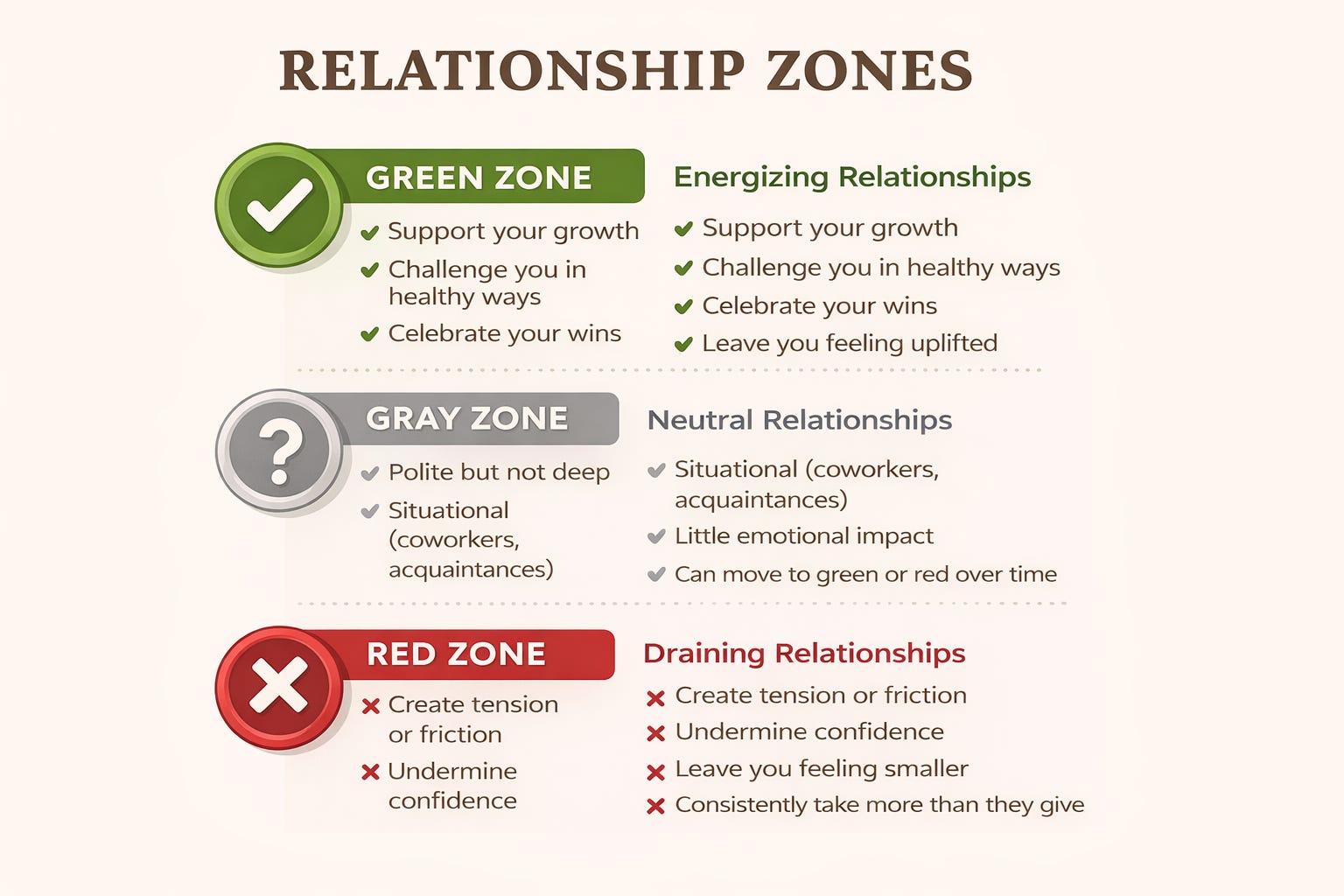
She explained that every relationship in your life eventually falls into one of three zones: green, red, or gray.
Green zone relationships energize you. These are the people who support your growth, challenge you in healthy ways, and celebrate your wins without hesitation.
Red zone relationships drain you. Interactions leave you feeling tense, smaller, or subtly undermined. There is friction that never seems to resolve.
Then there is the gray zone.
The gray zone is where many of us spend the most time, and it’s often the most confusing place to be. Something feels off, but it’s difficult to explain why. We keep the relationship moving forward while quietly carrying a sense of discomfort.
What struck me most when she described this framework was her observation that the gray zone doesn’t truly exist.
It’s simply the place where we haven’t yet acknowledged what we already know.
The moment you become honest about how a relationship actually feels, it almost always reveals itself as either green or red.
The Boundary Skill Most People Never Learn
For many women, the real challenge is not recognizing the difference. It’s setting the boundaries that follow that recognition.
One of the simplest frameworks Cesalina teaches is also one of the most practical.
When something isn’t working in a relationship, you name the behavior, explain the impact, and state the outcome you would prefer.
It sounds simple, but most people skip this step entirely.
Instead of addressing issues early, we absorb them quietly until frustration builds. Eventually the pressure releases all at once, and the conversation becomes far more dramatic than it ever needed to be.
Clear communication, delivered calmly and directly, prevents most of those explosions.
The Real Meaning of Confidence
What I appreciate most about Cesalina’s philosophy is that it doesn’t frame strength as aggression. Strength, in her world, is awareness. It’s the ability to recognize what’s happening in a room, inside a relationship, or within your own body before things escalate.
Confidence, in that sense, is less about performance and more about clarity.
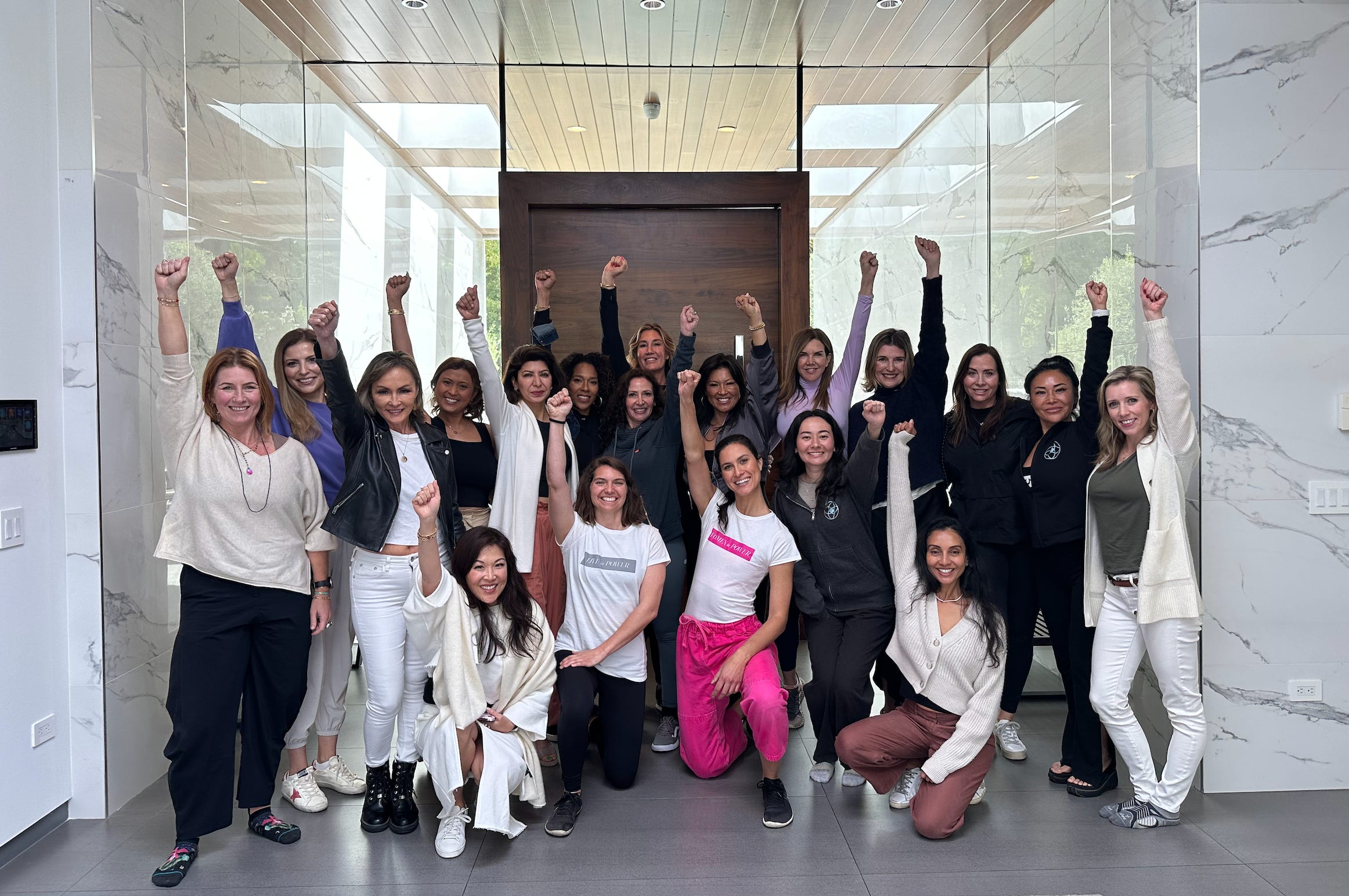
The women who carry real power rarely announce it. They simply move through the world with enough awareness to know when to step forward, when to hold space, and when to change the distance between themselves and others.
That kind of clarity takes practice. It requires honesty about our relationships, our boundaries, and the ways we sometimes shrink ourselves to avoid difficult conversations.
But the reward for doing that work is significant.
When you stop shrinking, you recover your energy. When you set clear boundaries, relationships become simpler and more respectful. And when you carry yourself with the posture of someone who belongs, people begin to respond to you differently.
Not because you’ve changed who you are.
But because you’ve finally stopped hiding it.